First: stay safe
- Stay at least 10 metres back from any downed wire, and anything it's touching, including the tree, a fence or puddles. Assume it's live. Call Alectra Utilities or 911.
- Don't climb onto the roof to cut branches yourself. Weight shifts the moment a branch is cut.
- Take photos of the damage from a safe spot before anything is moved. Your insurance company will want them.
- Keep people and pets out of rooms under the damaged part of the roof.
Make it safe first. Clean it up second.
What we do on a storm call
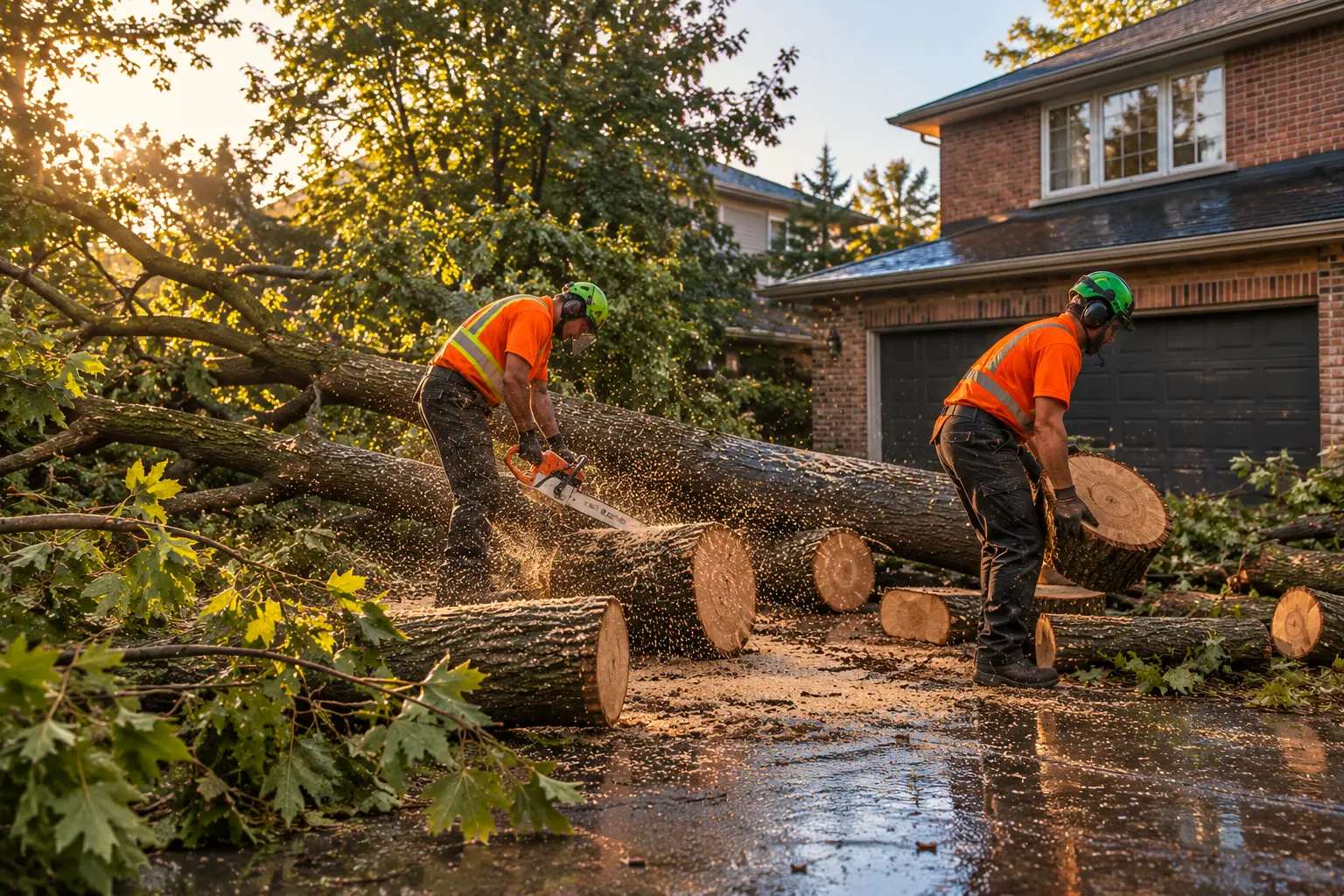
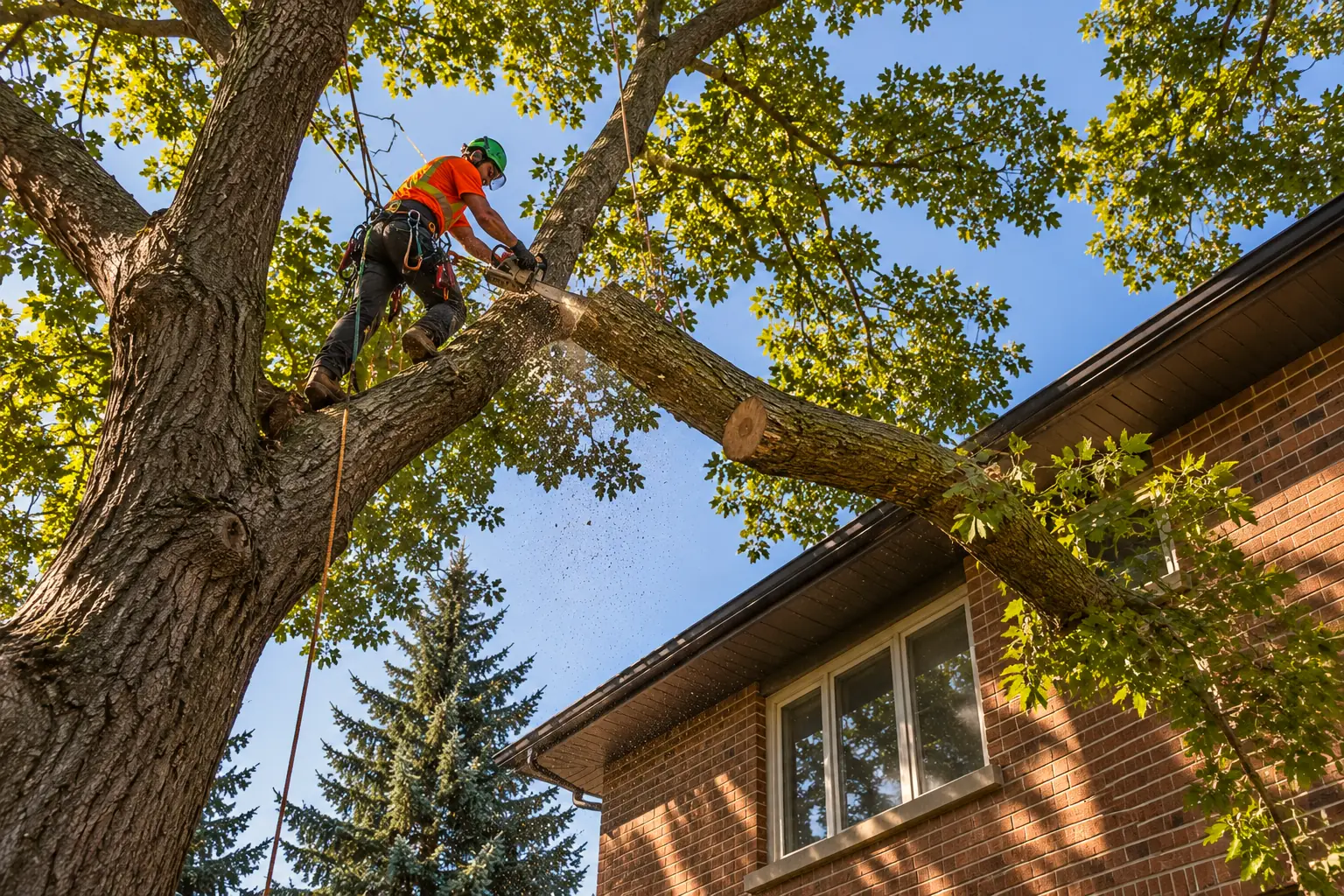
The first visit is about making it safe. If a tree is lying on the house, we don't just cut it where it lies. We rig it, take the tension out of the trunk and lift the weight off in pieces, so the roof isn't damaged further as the tree comes off. Hanging limbs (the ones caught up in the canopy) get roped and brought down under control.
Once everything is safe, we come back for the full clean-up: removing what's left of the tree, chipping the branches, hauling the wood and grinding the stump if you want.
Signs a tree is storm-damaged (even if it's still standing)
- A split where two main stems meet. These often finish breaking in the next storm.
- Hangers: broken branches caught up in the tree that could drop at any time.
- A new lean, or soil lifted or cracked on one side of the base.
- Torn bark or long cracks down the trunk.
Insurance and paperwork
We take before and after photos and write a clear invoice describing what was done, which is what most insurers ask for. We're not your adjuster, but we'll give you what you need to send them.
Where we take storm calls
Hamilton, Ancaster, Dundas, Stoney Creek and Binbrook. After a big storm, calls about trees on houses, cars and driveways come first, then everything else in the order it came in.